Constant Pressure Well Systems: Is One Right for Your Huntingdon County Home?
Water pressure is one of those things most homeowners take for granted right up until the moment it is not there. If you have ever stepped into a perfectly comfortable shower only to have the pressure plummet the moment someone runs the kitchen faucet or flushes a toilet, you already know the problem. For families in Huntingdon County and across South Central Pennsylvania who rely on private wells, this kind of pressure drop is a common frustration, and it usually has a direct solution: a constant pressure well system.
Walters Well Drilling, LLC installs constant pressure systems for residential, commercial, and agricultural clients throughout this region, and it is one of the upgrades we are asked about most often by growing households, homeowners adding bathrooms or irrigation, and anyone who has simply had enough of the stop-and-start pressure cycle that older pump setups can produce.
What Is a Constant Pressure Well System?
A standard well system uses a fixed-speed pump paired with a pressure tank. The pump runs at full power until the tank reaches its cutoff pressure, then shuts off entirely. Water is drawn from the tank until pressure drops to the cut-in point, and the pump kicks back on. The result is a pressure that cycles up and down within a set range, typically between 40 and 60 pounds per square inch, depending on how the tank is set. This works well enough for light use, but the swings become noticeable when multiple fixtures compete for the same supply.
A constant pressure system replaces the fixed-speed motor with a variable frequency drive, sometimes called a VFD or a variable speed drive. Instead of running at one speed or not at all, the pump motor speeds up or slows down in real time to match exactly how much water is being used at any given moment. The pressure tank still plays a role in the system, but it no longer has to do the heavy lifting between pump cycles. The result is a consistent, steady pressure at every fixture, regardless of how many are running at once.
Who Benefits Most From a Constant Pressure Upgrade?
Not every household needs a constant pressure system, but several situations make it a particularly good fit.
Larger households with high simultaneous demand. When multiple family members shower, cook, and run appliances at overlapping times, a standard system can struggle to keep up. A variable speed pump adjusts continuously to cover that peak demand without the pressure roller coaster.
Homes with added bathrooms or irrigation. If you have renovated and added fixtures, or installed an irrigation system for a lawn or garden, your original pump and pressure tank setup may no longer be sized for the load. A constant pressure system can often handle the expanded demand without requiring a full pump replacement or a much larger tank.
Properties with marginal well yield. A well that produces a reliable but modest flow benefits from a pump that draws water more gradually and consistently rather than in hard bursts. Variable speed operation puts less stress on a lower-yielding well and reduces the risk of drawing the water level down too quickly during peak use.
Homeowners who want quieter operation. Because the pump ramps up gradually rather than slamming on at full speed, constant pressure systems tend to run more quietly than their fixed-speed counterparts. Pressure tanks also experience less mechanical stress, which can extend their service life.
How Does a Constant Pressure System Compare to a Standard Setup?
The core difference is in how the pump responds to demand. A standard fixed-speed pump is binary: on or off. A constant pressure system is continuously variable, which has several practical consequences.
Energy use tends to be lower over time with a variable speed drive, since the motor only runs as hard as it needs to rather than always at maximum output. Pressure tanks in a constant pressure system can often be smaller than those in a traditional setup, since the pump responds quickly enough that the tank does not need to store as much reserve. The pump and motor also tend to last longer because they are not subjected to the repeated hard starts and stops of a fixed-speed system.
On the other side, constant pressure systems have more electronics involved, which means the variable frequency drive itself is an additional component that can eventually need service or replacement. The upfront cost is higher than a basic pump-and-tank setup. For smaller households with modest, consistent water use, the added complexity and cost may not pay off as quickly as it would for a busier home.
What to Expect During Installation in Huntingdon County
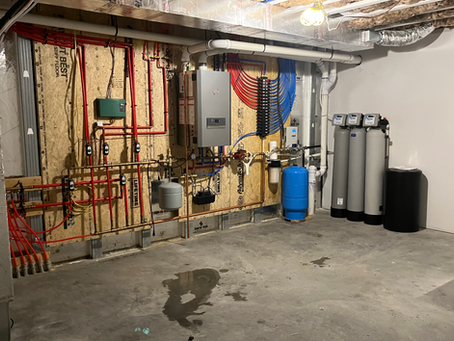
Installing a constant pressure system generally involves replacing the pump motor or adding a variable frequency drive to an existing submersible pump, updating the pressure tank if the existing one is not sized appropriately for the new setup, and configuring the controls to the pressure setpoint that matches the household's needs. In many cases the existing well casing and drop pipe can stay in place, making the upgrade less disruptive than a full well replacement.
The specific scope depends on the age and condition of the existing pump and tank, the well's depth and yield, and what the household needs in terms of flow rate and pressure. A proper site evaluation before installation ensures that the components are matched to the well and the property rather than installed to a generic specification that may not be the right fit.
Pressure Problems Are Worth Diagnosing Before Upgrading
It is worth noting that low or uneven pressure does not always mean the pump system needs to be upgraded. A waterlogged pressure tank, a failing pump motor, a partially clogged pipe, or a pump that was simply undersized from the start can all produce symptoms that look like a demand problem but have a simpler fix. Getting a professional diagnosis before committing to an upgrade avoids the situation of installing a constant pressure system only to discover that a straightforward pressure tank replacement would have solved the problem at a fraction of the cost.
On the other hand, if a pump is already aging and pressure complaints are a consistent pattern, a constant pressure system upgrade at the time of pump replacement is a natural opportunity to solve the problem once rather than doing a basic replacement that still leaves the household dealing with the same pressure swings.
Constant Pressure System Installation Across Huntingdon County
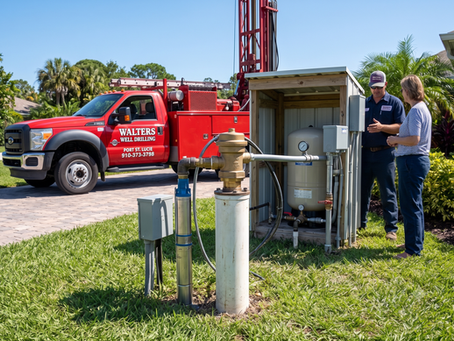
Walters Well Drilling, LLC installs and services constant pressure systems alongside submersible, jet, and solar pumps for homes, farms, and businesses across Huntingdon County and South Central Pennsylvania. If uneven water pressure is a recurring problem at your property, we can evaluate the well and pump system, identify the actual cause, and recommend the right solution whether that is a simple adjustment, a pressure tank replacement, or a full constant pressure upgrade.
Call us at (814) 259-3985 or email walterswelldrilling@gmail.com to schedule a consultation. You can also send us a message online.
This article is intended for general informational purposes. Actual pump selection and system sizing should be based on a professional on-site evaluation of your well and household water demand.
Recent Posts