Hard Water and Scale Buildup in Central Pennsylvania: What It Is Doing to Your Home and How to Stop It
If you own a home on a private well in Central Pennsylvania, there is a good chance your water is hard. Not unpleasant-tasting, not necessarily discolored, just quietly mineral-heavy in a way that does its damage slowly: a white crust around the faucet, a water heater that runs longer every year, showerheads that gradually lose their flow, and soap that never quite lathers the way it should. Hard water is the most common water quality complaint among private well owners in this region, and because it rarely triggers an alarm the way a rotten-egg odor or orange staining does, it often goes unaddressed for years.
Walters Well Drilling, LLC works with homeowners across Huntingdon County and South Central Pennsylvania on hard water treatment, and this article explains what hard water actually is, what it is quietly costing you, and what treatment options exist for well owners in this part of the state.
What Makes Water Hard?
Water hardness is caused by dissolved calcium and magnesium minerals that groundwater picks up as it moves through rock and soil. In Central Pennsylvania, the geology includes significant limestone and dolomite formations, both of which are calcium-rich and both of which contribute to water that ranges from moderately to very hard depending on where a well is drilled and how deep it reaches.
Hardness is measured in grains per gallon or milligrams per liter. Water is generally considered soft below about 1 grain per gallon, moderately hard in the 3 to 7 range, hard from 7 to 10, and very hard above 10. Many private wells in this region fall into the hard to very hard category, though the only way to know your actual number is a water test. Hard water is classified by the EPA as a secondary contaminant, meaning it is regulated for cosmetic and functional reasons rather than as a direct health hazard, but its effects on a home add up quickly.
What Hard Water Does to Your Home Over Time
The damage from untreated hard water is cumulative and shows up in several places at once.
Water heaters. Scale accumulates on the heating element and inside the tank. The heater has to work harder and longer to heat water through a layer of mineral buildup, which increases energy consumption and shortens the unit's lifespan. A tank that might otherwise last 12 to 15 years can fail noticeably earlier in hard water conditions without periodic flushing or softener protection.
Pipes and fixtures. Scale builds up inside pipes over time, gradually narrowing the interior diameter and reducing flow. In homes with older galvanized or copper supply lines, this is a particularly slow-moving but real problem. Aerators on faucets and shower heads clog with mineral deposits, causing pressure loss and uneven spray patterns that most homeowners attribute to aging fixtures rather than the water itself.
Appliances. Dishwashers, washing machines, and coffee makers all see shortened service lives in hard water households. The mineral deposits left behind by hard water interfere with heating elements, clog spray arms, and leave white film on dishes and glassware even after a full wash cycle.
Soap and cleaning products. Hard water reacts with soap to form calcium soap, a grayish scum that does not rinse cleanly. This is why hard water households tend to use significantly more detergent, shampoo, and cleaning products than soft water households, and still end up with soap residue on skin, tubs, and laundry. The chalky buildup on shower walls and glass doors that seems impossible to keep clean is usually calcium soap combined with mineral deposits.
Skin and hair. Hard water does not rinse soap completely off skin and hair. The residue can leave skin feeling dry or tight and hair feeling dull or straw-like, particularly for people who are already sensitive to product buildup.
How Hard Water Is Treated for Private Wells
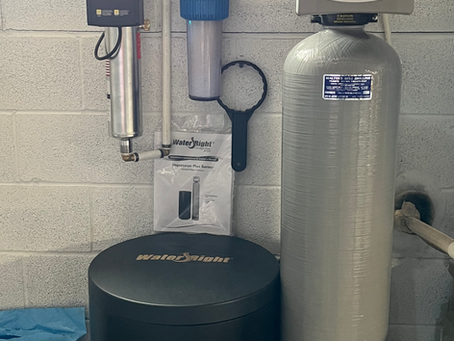
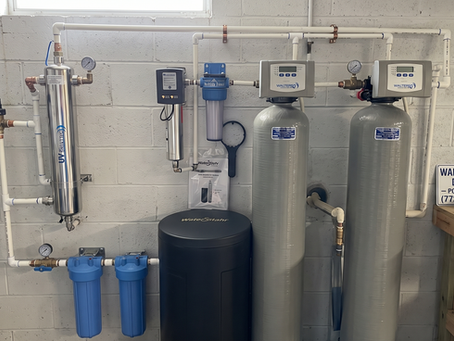
The most common and effective treatment for hard water is a ion-exchange water softener. A softener passes water through a tank filled with resin beads carrying sodium ions. The calcium and magnesium in the water swap places with the sodium ions on the beads, and softened water flows into the house. The resin regenerates periodically using a salt brine solution, which is why softener owners add bags of salt to a brine tank on a regular schedule.
A properly sized and maintained softener produces noticeably soft water throughout the house, extends the life of water-using appliances, and eliminates scale buildup in pipes and fixtures. The degree to which this is noticeable day to day depends on how hard the incoming water is; households going from very hard to soft water typically notice the difference immediately in how soap lathers and how surfaces feel after washing.
For households that prefer not to add sodium to all of their drinking water, a whole-house softener paired with a dedicated unsoftened tap for drinking and cooking is a common approach. Alternatively, some homeowners install a separate under-sink reverse osmosis filter for drinking water alongside the whole-house softener.
Salt-free conditioners are marketed as an alternative to traditional softeners. These systems work by changing the form of the minerals in the water rather than removing them, which can reduce scale formation in some circumstances but does not actually remove calcium and magnesium from the water. For homeowners with very hard water and significant appliance and plumbing concerns, a properly sized ion-exchange softener remains the most reliable solution, and the right choice between systems depends on the actual hardness level in the water test and what the homeowner is trying to accomplish.
Getting the Right System for Your Well Water
Softener sizing depends on water hardness and household water use, and getting the size right matters. An undersized softener runs out of capacity before its regeneration cycle, letting hard water pass through untreated. An oversized softener wastes salt and water on unnecessary regeneration cycles. The starting point for any treatment recommendation is an actual water test that establishes the hardness level and identifies any other minerals that might affect which system or combination of systems works best.
Walters Well Drilling, LLC provides hard water testing and water softener installation for private well owners throughout Huntingdon County and South Central Pennsylvania. We use Water-Right softeners sized to the property's water hardness and household demand, and we treat any secondary issues like iron, sulfur, or bacteria at the same time rather than addressing one problem and leaving others in place.
Find Out What Is in Your Well Water
If you have noticed scale buildup, soap scum, shortened appliance life, or any of the other signs of hard water in your home, a water test is the right first step. Call Walters Well Drilling at (814) 259-3985 or email walterswelldrilling@gmail.com to ask about water testing and a free consultation. You can also send us a message online.
This article is intended for general informational purposes. Water treatment recommendations should be based on your actual test results rather than symptom identification alone.
Recent Posts